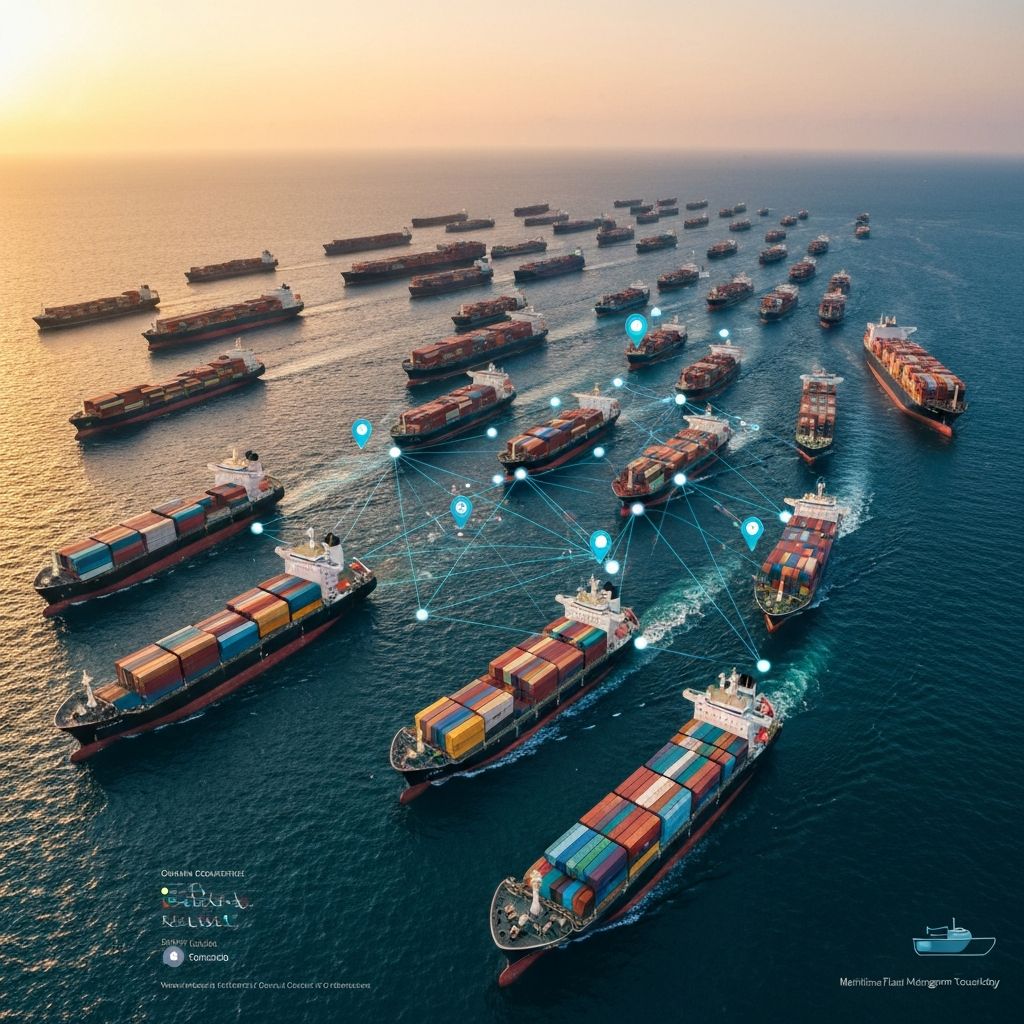
Modern maritime operations rely on continuous global connectivity to enhance safety, optimize routes, enable autonomous systems, and leverage AI-driven decision making across vessel fleets.
The Evolution of Maritime Connectivity
The maritime industry is undergoing a digital transformation driven by the need for real-time data from vessels operating across global waters. Traditional satellite-only communications have given way to hybrid approaches that leverage cellular networks in coastal zones and satellite backup for open ocean operations. This convergence enables modern fleet operators to access comprehensive vessel data, weather information, port logistics, and AI-powered predictive analytics from anywhere.
Modern Fleet Management Requirements
Contemporary ship operators require continuous connectivity for comprehensive fleet visibility and operational control. Vessel tracking systems provide real-time position data enabling route optimization and fuel consumption minimization. Machinery monitoring systems transmit engine performance metrics, enabling predictive maintenance and reducing unexpected breakdowns. Crew communication systems maintain contact with offshore personnel for coordinated operations and emergency response. Environmental monitoring captures weather patterns, ocean conditions, and marine life detection for safety and compliance.
AI-Powered Maritime Intelligence
Advanced AI systems are revolutionizing maritime operations through continuous data analysis. Predictive weather systems combine multiple data sources to forecast conditions hours ahead, enabling proactive route adjustments and fuel optimization. Autonomous navigation assistance uses real-time environmental data to optimize vessel routing, reducing voyage time and fuel consumption by 5-15%. Anomaly detection systems analyze machinery performance data to predict maintenance issues before they cause failures, preventing costly downtime. Crew workload optimization systems use historical data and predictive models to schedule maintenance activities efficiently without overloading crew capacity.
Connectivity Challenges at Sea
Vessels operating globally face unique connectivity challenges. Open ocean areas have limited cellular coverage, requiring hybrid connectivity solutions combining cellular and satellite approaches. Coastal operations benefit from cellular networks but experience coverage variations as vessels move between jurisdictions. International waters navigate complex regulatory frameworks governing communications and data transmission. Bandwidth limitations at sea require efficient data transmission prioritizing critical operational data over less essential metrics.
Webbing Global Connectivity for Maritime
Webbing Solutions' multi-IMSI SIM technology provides maritime operators with seamless cellular connectivity across 200+ countries and coastal regions. When vessels approach shore, the system automatically selects optimal local cellular carriers, providing high-speed data connectivity for heavy data transfers including high-resolution sensor data and AI model updates. Automatic failover ensures continuous connectivity, switching between cellular networks and satellite backup as coverage varies during transit. Priority routing ensures critical operational data receives priority over informational analytics, maintaining performance even when bandwidth is constrained.
- Coastal Optimization: Automatic network selection provides optimal connectivity in ports and coastal zones
- Redundant Connectivity: Seamless failover between cellular networks prevents data interruptions
- Global Coverage: Access 600+ carrier partnerships across all major shipping routes
- Priority Routing: Ensure critical operational systems maintain service quality
- Flexible Bandwidth: Scale data capacity for periods of heavy analytics transmission
Real-World Maritime AI Applications
Route Optimization and Fuel Efficiency
AI-powered route optimization systems analyze real-time weather data, ocean currents, port congestion, and fuel consumption patterns to calculate routes that minimize voyage time and fuel consumption. Ships using such systems typically reduce fuel costs by 5-10% while improving scheduling reliability. The systems continuously receive updated weather and hydrographic data through reliable connectivity, enabling dynamic route adjustments throughout the voyage.
Autonomous Voyage Assistance
Advanced AI navigation systems assist human captains with autonomous course maintenance, collision avoidance, and environmental response. These systems require continuous access to maritime traffic data, weather updates, and electronic navigation charts. The systems analyze current conditions and historical data to recommend optimal navigation strategies, reducing human workload and improving safety in complex navigation scenarios.
Predictive Maintenance Intelligence
AI systems analyzing continuous machinery telemetry can predict component failures days or weeks in advance, enabling planned maintenance that prevents costly breakdowns and maintains schedule reliability. Systems predict bearing wear, corrosion development, and other degradation patterns specific to maritime environments. Reliable connectivity ensures sensors transmit data continuously without loss, providing the complete datasets required for accurate predictions.
Crew Optimization Systems
Advanced scheduling and workload optimization systems ensure crew activities are coordinated efficiently without overloading individual team members. Systems analyze vessel status, maintenance requirements, weather forecasts, and crew capabilities to generate optimal task scheduling. Real-time communication enables coordination between bridge, engine room, and maintenance teams for efficient execution.
Implementation Considerations
Implementing AI-enabled maritime connectivity requires careful planning. Assess current data infrastructure and AI system capabilities. Select SIM and connectivity solutions optimized for maritime environments with proven reliability in open ocean conditions. Configure priority routing to ensure critical operational systems maintain quality of service. Plan for gradual transition to advanced AI systems with proper crew training and validation procedures.
IoT Experts Maritime Expertise
IoT Experts specializes in maritime connectivity solutions for modern fleet operations. Our team provides customized connectivity configurations optimized for your specific vessels, routes, and AI systems. We assist with implementation of advanced monitoring and analytics capabilities, integration with existing maritime systems, and ongoing optimization of connectivity and AI performance. 24/7 maritime-specific technical support ensures your operations maintain continuous connectivity and access to critical AI-powered decision-making systems.
Contact IoT Experts to discuss how advanced cellular connectivity and AI systems can modernize your maritime operations, improve efficiency, and enhance crew and vessel safety.