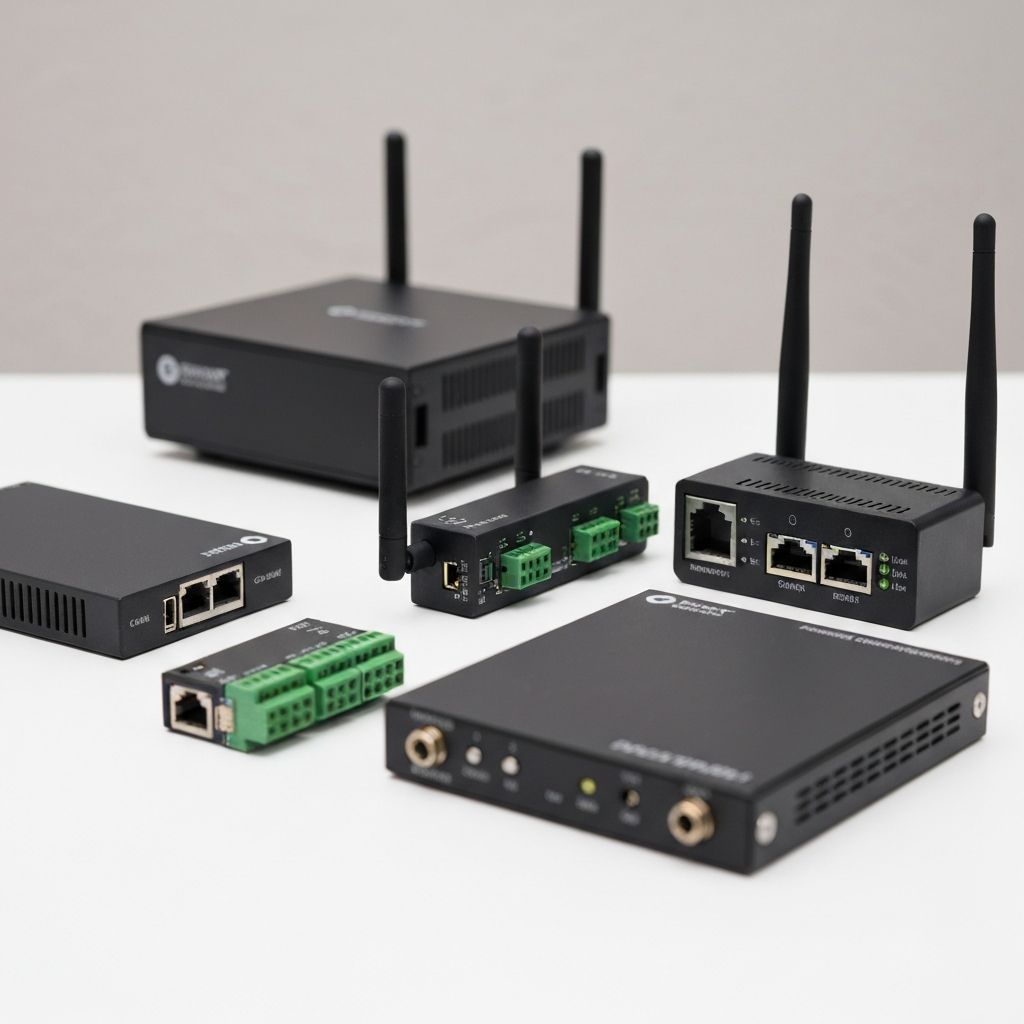
Navigate the diverse landscape of IoT hardware and select the optimal routers, modems, and gateways for your global connectivity needs.
Understanding Core IoT Hardware Components
The success of an IoT deployment hinges on selecting the right hardware. These devices act as the bridge between your sensors, actuators, and the wider network. Key components include:
Industrial Routers
Industrial routers are built to withstand demanding environments, offering enhanced durability, reliability, and advanced networking features. They are essential for connecting multiple devices within a local network and providing a gateway to cellular or wired networks. When selecting an industrial router, consider:
- Connectivity Options: Ethernet ports, Wi-Fi, and cellular (supporting 4G LTE, LTE-M, NB-IoT).
- Environmental Resistance: Temperature, humidity, vibration, and ingress protection (IP ratings).
- Security Features: VPN support, firewalls, and intrusion detection.
- Management Capabilities: Remote configuration, monitoring, and firmware updates.
These are ideal for applications in manufacturing, transportation, and outdoor monitoring stations.
Cellular Modems
Cellular modems are the devices that enable your IoT hardware to connect to cellular networks. They translate data from your device into a format that can be transmitted over cellular infrastructure. Key considerations include:
- Cellular Technology Support: Ensure compatibility with 4G LTE, LTE-M, NB-IoT, or 5G as required by your deployment region and application needs.
- Form Factor: Compact modules for integration into devices or standalone USB modems.
- Reliability: Industrial-grade modems for consistent performance in varied conditions.
- SIM Card Compatibility: Support for standard, micro, nano, or embedded SIMs (eSIMs), especially multi-IMSI SIMs for global roaming.
These are crucial for any device requiring wireless cellular communication.
Edge Gateways
Edge gateways are sophisticated devices that sit at the "edge" of the network, closer to the data source. They perform data processing, analysis, filtering, and aggregation locally before sending it to the cloud or central servers. This reduces latency, conserves bandwidth, and enhances security. When choosing an edge gateway:
- Processing Power: Sufficient CPU and memory for your intended edge computing tasks.
- Connectivity: Support for various IoT protocols (e.g., MQTT, CoAP), cellular, Wi-Fi, Bluetooth, and wired interfaces.
- Software Platform: Compatibility with edge computing frameworks and operating systems.
- Security: Robust hardware and software security features, including secure boot and data encryption.
Edge gateways are vital for applications demanding real-time local decision-making, such as industrial automation, smart building management, and complex sensor networks.
Benefits of Strategic Hardware Selection
- Reliable Connectivity: Ensures your IoT devices communicate consistently and effectively.
- Optimized Performance: Maximizes data throughput and minimizes latency.
- Enhanced Scalability: Supports the growth and expansion of your IoT deployment.
- Cost-Effectiveness: Prevents overspending on unnecessary features or underperforming hardware.
- Deployment Longevity: Ruggedized and future-proofed hardware increases the lifespan of your solution.
Contact IoT Experts for expert hardware consultation. We can guide you in selecting the right industrial routers, cellular modems, and edge gateways that align with your specific application requirements and global connectivity strategy.